Hey, you are reading Investment Talk. If you’d like to join the 19,800 other readers learning about life, the stock market, and the companies within it, subscribe below. You can check out my other articles and follow me on Twitter too. If you enjoy today’s article, then feel free to share it, it helps a lot. Now let’s begin.
Soaking It Up
An interesting factoid that the Federal Reserve shared1 last night. From March 8th to March 15th, small domestic banks within the United States shed ~$120 billion in deposits across the country. Foreign-related banks also shed ~$45 billion and collectively the banking sector lost more than $98 billion in deposits.

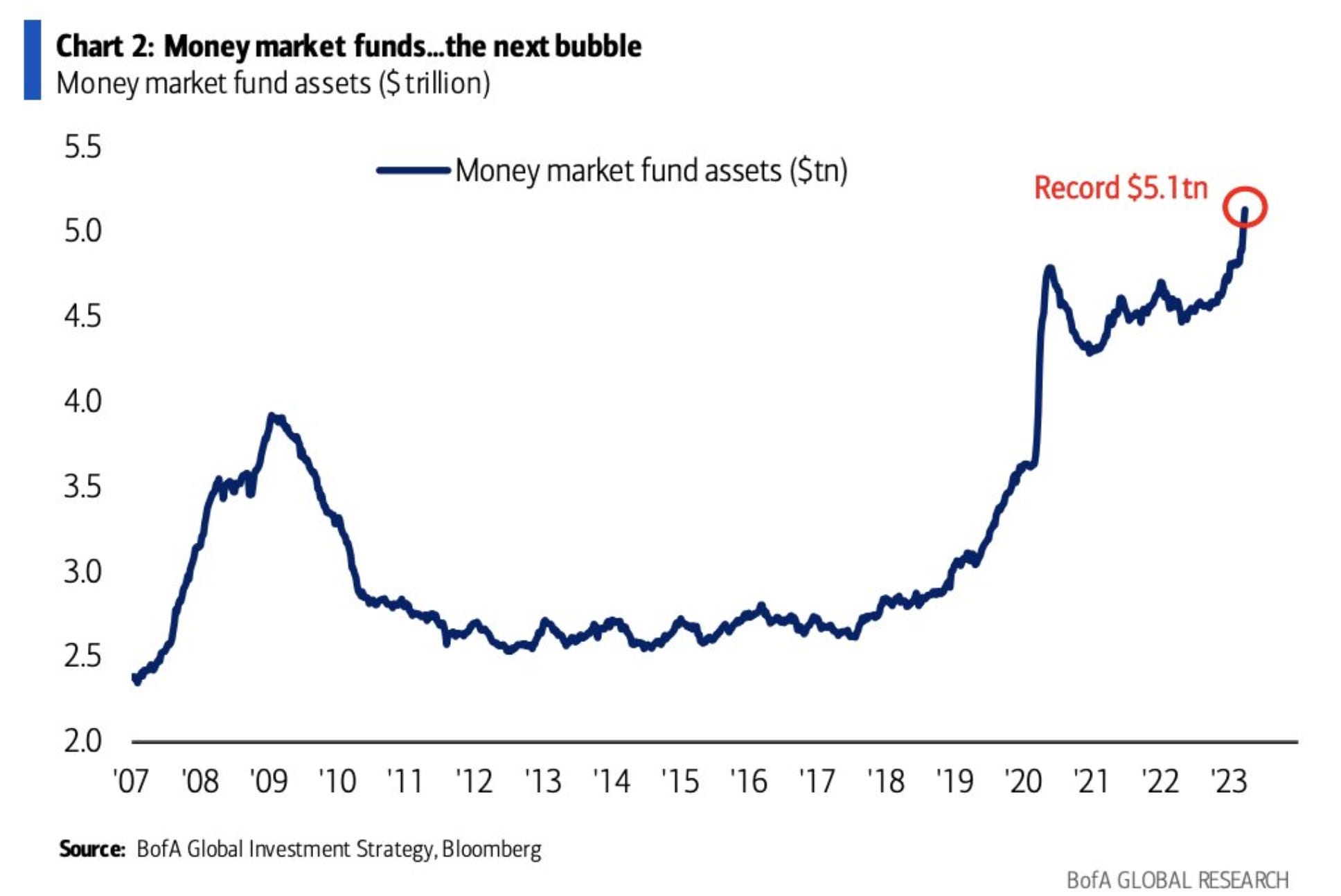
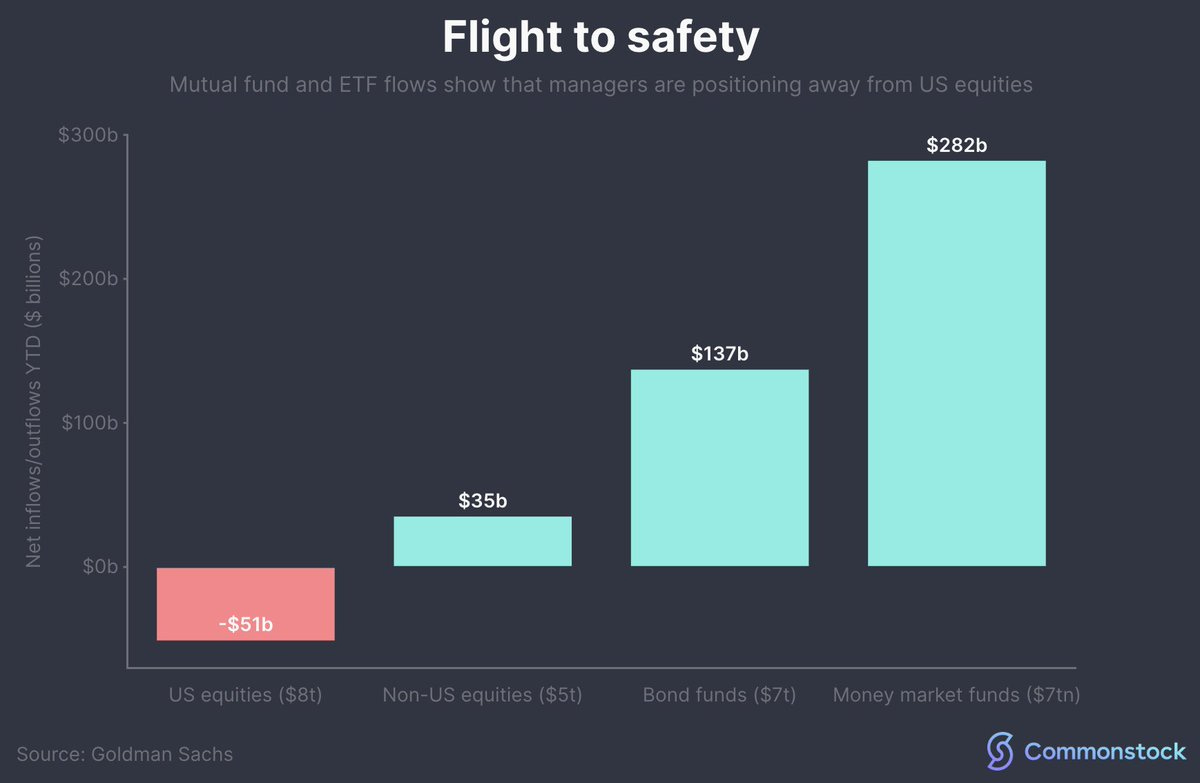
As for where this money is going, there have been reports of substantial inflows to money market funds2, treasuries, and other alternatives this year so I suspect that is part of the puzzle. But to be candid, I don’t really know. Some of it is flowing through to the larger banks.
Large domestic banks, defined as the top 25 domestically chartered commercial banks in the country, have seen deposits rise by $66.7 billion from March 8th to March 15th.
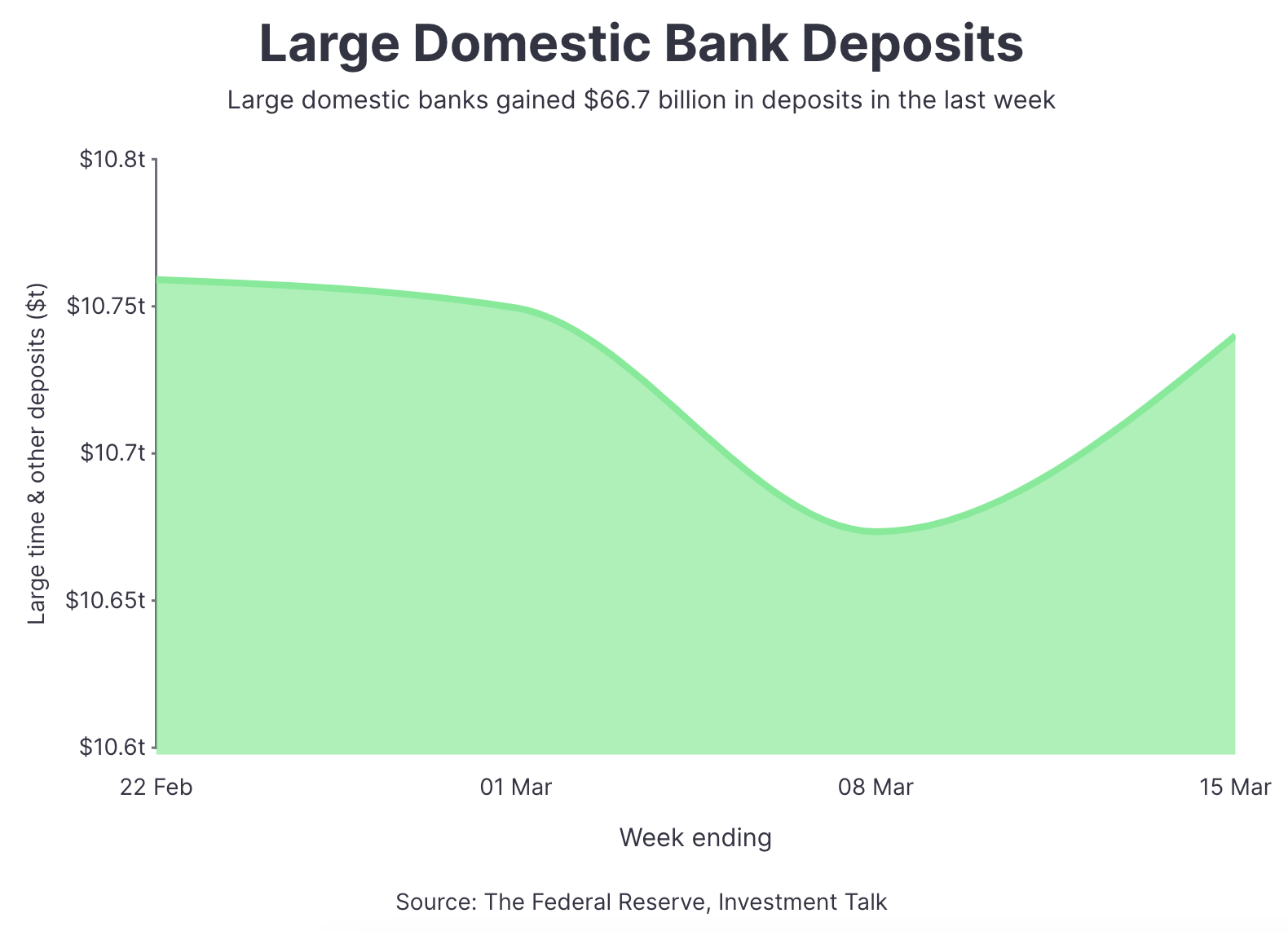
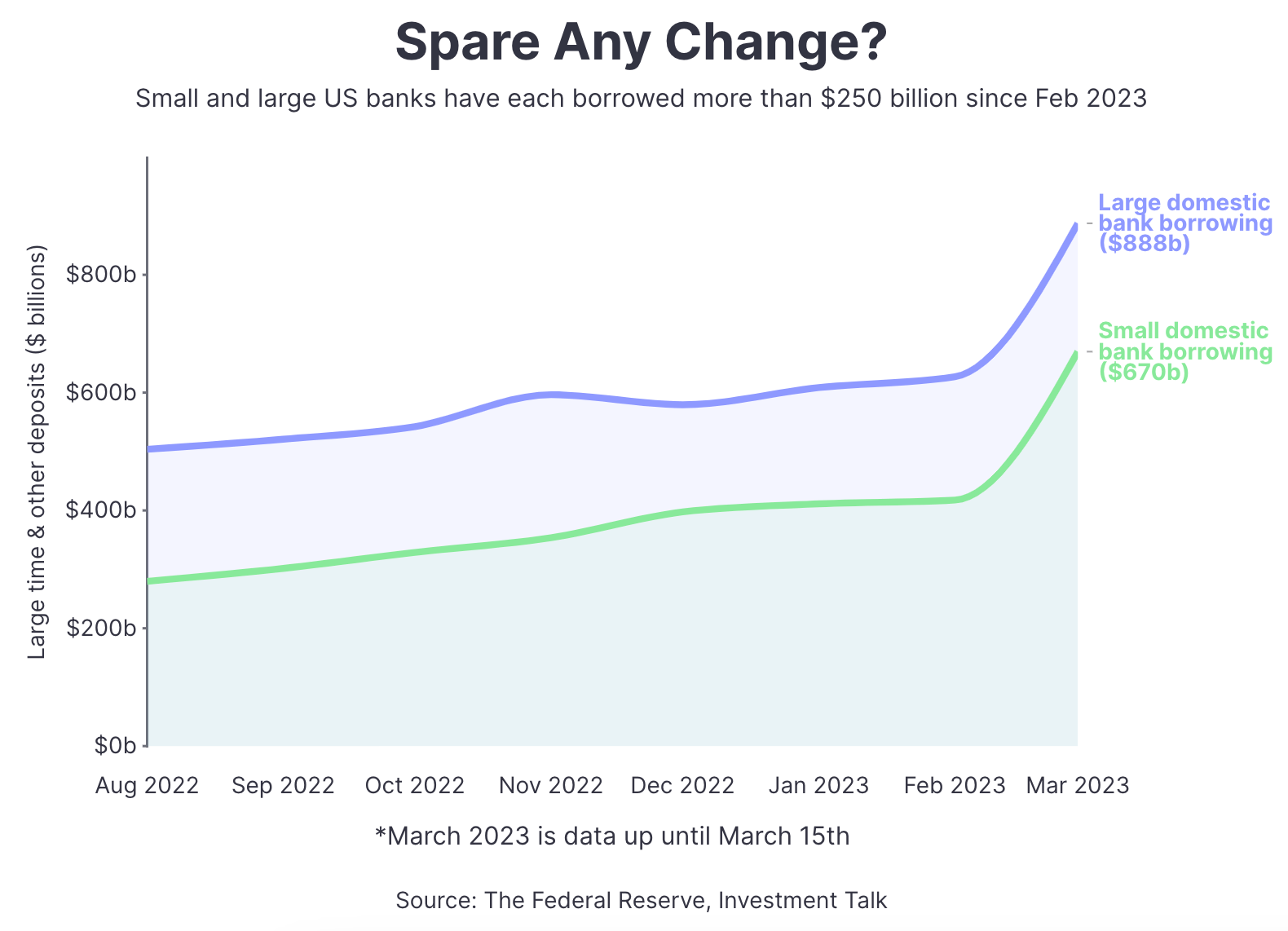
These inflows may well be understated when you consider that Silicon Valley Bank, once the 15th largest bank in the US, would have been counted as a large bank in this sample. Despite the considerable withdrawals from Silicon Valley Bank, large banks still managed to increase deposits. From the end of February to March 15th, small and large US banks increased borrowings by more than $500 billion. Collectively, when accounting for the $28 billion in decreased borrowings from foreign-related banks, this amounts to a net increase of ~$475 billion. When you consider the smaller base that small banks started from, their growth in borrowings is relatively grander in scale.
What is going to be especially interesting is the data release for the period of March 15th to 22nd. As news percolates about more US and European banks spooking investors, I am fairly confident we are not through this just yet.
Until then, have a splendid weekend.
Thanks for reading,
Conor
See two images.