

As I reflected on my performance in 2023, I was reminded that benchmarking can be a brutal process. But it keeps you humble. I don’t spend a lot of time thinking about my chosen benchmark, the S&P 500. I occasionally think as an international investor I should change it. But then again, I find the process somewhat arbitrary and if I am going to pick one, it may as well be the "best" one1. I do this to keep me humble. At least that’s what I tell myself.
It’s natural that when investors question how their portfolio is doing, they ask “How is it doing compared to…”. If I told you I was down 3% last year you might think “Better luck next time”. If I explained that I did this while the market was down 25% over the same period your perception of my performance would change. We are comparative creatures by design. We tend to evaluate our actions in relation to others. This makes us competitive, motivated, inspired, and grateful. By the same virtue, this makes us prone to envy, jealousy, anxiety, stress, or contempt. The chosen benchmark of most investors happens to be the S&P 500. I’d wager that this index has caused more hair to fall out than the unfortunate genetic predisposition that is male pattern baldness. I’d even go so far as to say that many have an unhealthy obsession with it. We’re getting into that today but first, a quick word from today’s sponsor, Borsa.
Borsa: Every Earnings Call In One App

Earnings season is here and Borsa, which makes listening to earnings calls as easy as listening to podcasts, is this season’s must-have tool. Dubbed the “Spotify of earnings calls”, Borsa allows you to listen to earnings calls at your convenience. Their incredibly simple platform provides transcripts, earnings releases, and presentation slides. Their library of more than 3,200 companies makes it the ideal companion during every earnings season.
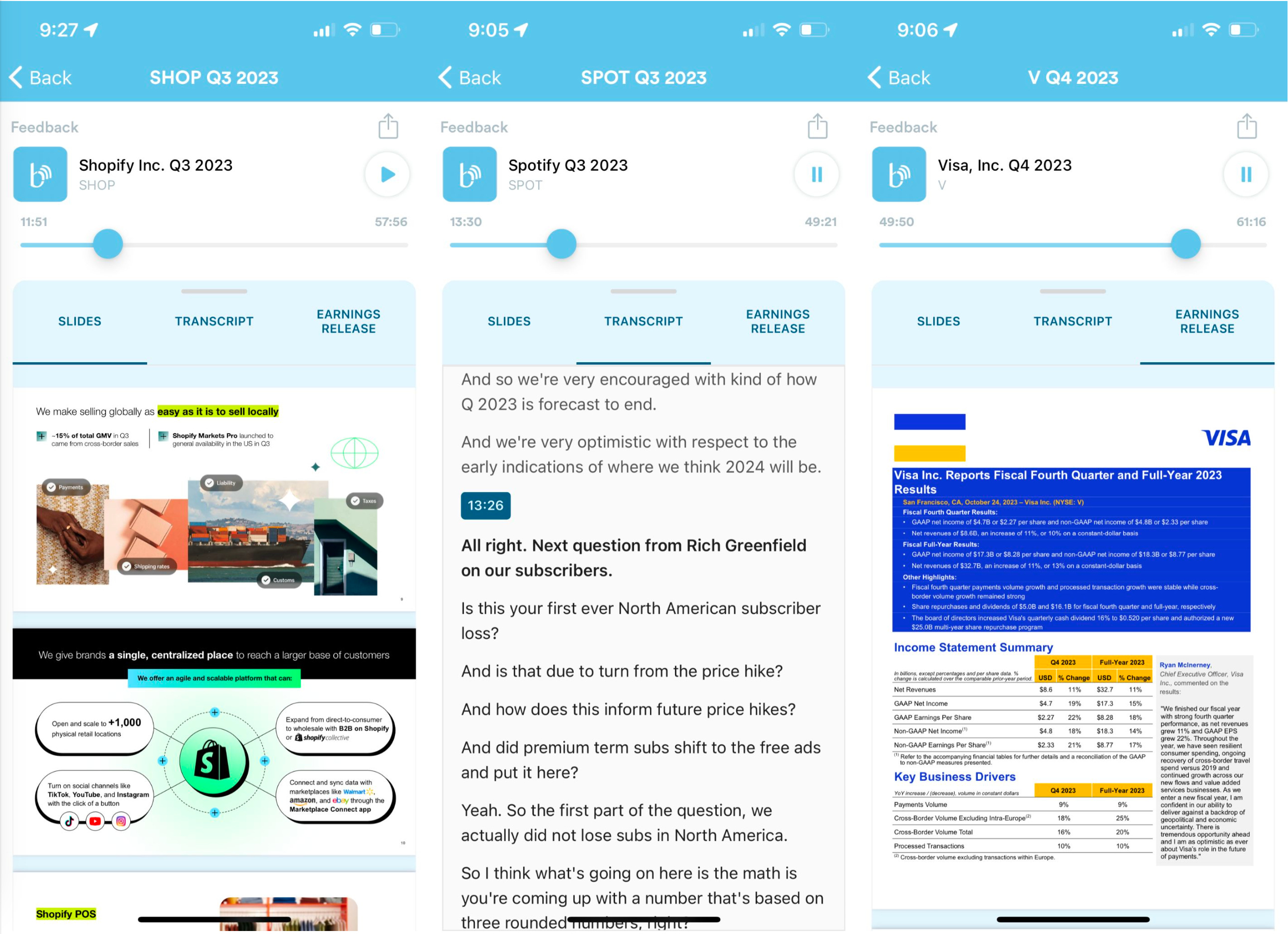
Bootstrapped and founder-led, Borsa has been growing organically over the last six years through word of mouth and was featured live on CNBC with Kelly Evans. Individual investors, analysts, reporters, and money managers all love using Borsa during earnings season.
Simple: Borsa aggregates earnings calls into a simple feed, helping you stay up-to-date during earnings season.
Access: Read through transcripts, earnings releases, and presentation slides while listening to earnings calls.
Stay Ahead: Borsa keeps you informed, engaged, and ready to make savvy decisions.
Access to Borsa’s full library of calls, press releases, and slides is 100% free. Borsa also offers a premium tier that unlocks custom notifications, downloadable calls, automated call transcripts, and links to live webcasts.
Download Borsa this earnings season, and let me know what you think.
Why Benchmark?
I’ve talked about this before, at length, with an albeit more comedic tone. Why don't you just sell all your stocks and buy ETFs, you'll probably have better performance? (see footnote2 for the answer). This is a question I proposed in an article last year. If people try so hard to beat a benchmark, with most failing, why not buy the benchmark? The answer(s) boil down to; seeking higher returns, self-confidence, learning by doing, and love of the game. That’s why people pick stocks, but why do we feel compelled to benchmark?
Suppose you spend an average of 20 hours a week studying companies for your portfolio. At 52 weeks a year, that nets out to ~1,040 hours, or 43.3 days. Let’s say you have a long and fruitful life and retain the fire and passion for this activity and you invest for 40 years. That’s 1,732 days of your life, or 4.75 years spent knee-deep in the filings and transcripts. Almost 5 years that could have been spent elsewhere. Some of us think about our time as having a monetary value. We are paid hourly or as a constitute of our time and experience on a job. Therefore, we’d expect to have some form of compensation that makes this effort worth our while.
You can't manage what you don’t measure. So what’s a good compounded annual growth rate (CAGR) for 40 years of work, assuming you invested $10,000 per year? Opinions on this matter vary, but for the sake of argument let’s say that buying a hypothetical index fund and sitting in it for 40 years would have returned 8% compounded annually. Suppose after 40 years of hard work you look at your portfolio report and see that you generated a 6% compounded annual return.
One perspective is that you made yourself a small fortune of ~$1.4 million. Another is that you lost ~$1.4 million because if you had instead invested in the fund you would have earned ~$2.8 million and 4.75 years of your life back. This isn’t just about ego and beating an arbitrary benchmark, it’s about maximising return and considering opportunity costs. People want to know if what they are doing is worth their time.
Why do funds and advisors benchmark?
There is a difference between a benchmark and a reference point. The primary difference is the standard of comparison. It’s perfectly fine to run a UK equity portfolio and glance at the S&P 500’s return as a reference point to see what you could have done by sitting on your hands. But this is an apples-to-oranges comparison. Comparing performance with an asset which similarly mimics the styling of your UK equity portfolio would be a benchmark; a comparison of apples-to-apples. A benchmark must have relevance to the portfolio. Funds, advisors, and money managers use benchmarks for a host of reasons; performance measurement, risk assessment, accountability, marketing, compliance, strategy alignment, and the justification of fees. The rationale for anyone or anything charging a fee to exercise control over someone’s wealth is more obvious. I am paying you to manage my wealth when I could be paying John, Peter, or Paul. So how can I assess that you are worth the fee? How can I be sure you have invested my money in the way I signed up for?
A portfolio is constructed based on an array of variables and this is true regardless of whether it’s a publicly traded fund, a client’s account, or something else. These variables include; risk tolerance, goals, time horizon, objectives, liquidity needs, desired diversification, values, beliefs, and tax considerations. It may be constructed to reflect a specific theme, level of credit quality, asset class, style, or index. A portfolio is usually created with all of those variables in mind and is set up to deliver on a defined objective.
In institutional or professional environments, an appropriate benchmark needs to be chosen so that apples can be compared with apples, and so that someone’s neck can be rung if things don’t go to plan.
Why the S&P 500?
It might “feel” that way to many because American companies are so popular. Many of the largest within the index are global. We identify with them, they resonate with us, we can understand them, and we buy them. It’s common in many non-US countries to have sizeable US exposure; whether that’s because of reasons stated above, the premium they command, or the level of quality and size. For Americans, it must feel natural to be primarily exposed to one’s own country. For others, it might not be so natural. If I, for example, woke up one day and discovered I had 80% exposure to the UK, I would get my head examined. For most international investors in the West, American companies feel less “foreign” due to the proximity of their businesses to us. I am primarily exposed to the US, followed by the UK, and then France. Yet I struggle to imagine having the same composition of wealth exposed to, say, Japan.
There’s familiarity and the fact that US companies are so widely accessible. Another factor is that the S&P 500 is often quoted as the yardstick with which all performance is compared; the West’s reference point if you like. This proliferation of constant comparison may result in many using the S&P 500 as a reference point instead of an explicit benchmark, and the two become muddied somewhere along the way. As I alluded to in the beginning, we want to compare ourselves to the “best” which is not necessarily always the right thing to do.
The United States is this era’s global hegemon and has been since at least the Second World War. It has the largest GDP of any country, the Dollar is the global reserve currency, it produces the world’s largest and most innovative companies, and central banks across the world look at The Federal Reserve to see what they do first. The United States is the economic figurehead and, for whatever reason, investors look to the US as an indicator of economic health. They look to its golden child index as the indicator for investment returns.
There are some other theories I could spin up. The fact it has a long and rich history provides a robust set of data with which to make comparisons. The effect of various biases; the S&P 500 has done so well, leading many to believe it will continue to do so. The fact that companies tend to be so globally diversified in their revenue make-up. It could also be that you just happen to own predominately large-cap US companies. In this case, the S&P 500 is a suitable benchmark. If not the S&P, then select a benchmark which is as close to an apple as the apple you operate.
Do what feels comfortable
Most investors use the S&P 500 as a reference point for desired returns. Few are likely to consider if their own objectives marry up with those of the S&P 500. Like every topic, there are converging views. Some investors believe benchmarking is critical. Others feel it’s a waste of time. I happen to fall somewhere in the middle. On the one hand, it’s good to benchmark to a suitable baseline to see if the time you are spending operating a portfolio has been worthwhile as far as total returns are concerned. There are a range of other non-tangible benefits that I am missing here; such as education and experience, but for the sake of simplicity, we can forget about those momentarily (I discuss those here). For professionals, it’s an integral part of accountability.
On the other hand, benchmarks can be impractical. What happens if, over time, your composition and goals change? You choose a new benchmark, of course. Then you have the dilemma that your historic performance is no longer relevant to your new benchmark, which is only relevant to your performance from today onwards. Okay, use two benchmarks, one for period X and the other for X+1. It feels arbitrary to some. If you could have earned an additional 3% per year over a decade investing in a low-cost MSCI World ETF, then it’s natural to think about what you could have achieved in life with all of those hours of additional free time. On the contrary, I don’t think individual investors necessarily need to conform to the alpha-maximalist attitude. If the pursuit of investing brings you purpose, a highly sought-after element of fulfilment, then who are we to judge?
The S&P 500, or a relevant benchmark, could be used as a reference point while simultaneously benchmarking against… yourself. When Nicolai Tangen, CEO of Norway’s $1.4 trillion wealth fund, was asked for advice about judging performance he suggested what he refers to as inertia analysis; “Run your January 1 portfolio for the full year without any changes and compare it to your actual results. It's awful because some years you realize all you did was subtract value when you went into the office”. This act of inward reflection might develop an understanding of how and when you impact your own returns. If you want to beat a benchmark, it starts with objectively appraising your own skill. I am sure that witnessing the returns you could have generated vs what you did in some years would be a sobering lesson. All said and done, benchmarks have their place but for individual investors, their importance depends on said individuals’ wants and desires. I am curious to hear what you think about benchmarks too.
Thanks for reading,
Conor
Look at any lengthy period and you’ll find that most of the time the S&P 500 does somewhere between 8% and 12% compounded annually. Since 1993, when the first S&P 500 fund (SPY) was launched, the vehicle has returned 10% compounded annually. In other words, it would have turned $10,000 into $195,000 by now.
The answer:

Nick & Zak had this to say on the benchmarking:
“So, there is no confusion: the index is not our benchmark. Zak and I spend no time at all thinking about the index indeed we were unaware of the index return until I set about writing this letter and its inclusion at the top of this letter reflects our genesis in an index-relative investment firm more than our orientation. If we started Nomad again today, I'm not sure we would present results this way but, be that as it may, we will leave the index at the top of this letter for now, as for some Partners it may be helpful in placing our results in context.
Zak and I have witnessed many investors make terrible investment decisions from thinking via the index. The most common mistake is to view the index (indeed any index?) as a risk free "home". That this disposition still exists after the irrational index bubbles that preceded the Asian crisis and technology collapse may be testament to the strength of the marketing skills of the financial establishment. Once the index is seen as risk free the mistakes that follow cascade and include: requirement to have an opinion on everything inside the index regardless of one's circle of competence, an unwillingness to invest in other better opportunities, and over diversification. These three mistakes destroy a lot of capital. We came across one country manager's report claiming that although his country had done poorly it had proved valuable as a "portfolio diversifier" in a global fund: Many a furrowed brow these last few weeks figuring out what that means! Even so, index relative funds are the industry norm because they sell. And they sell because the client does not trust their manager with the keys to the Ferrari. It is a ghastly Faustian pact.
We are walking down the road less traveled when we argue that the index is not risk free, is one, of many, opportunity sets. This year that opportunity set beat us. It may do so again next year too. And the year after that. We should all be prepared for that possibility and stoic at its occurrence. A rational mind understands that it is the destination that is important, and if we have some skill in picking stocks (please, no answers on a post card!) then, whilst annual returns may bounce around, our destination will be some way ahead of the index. Zak and I are not envious of index returns and we encourage you not to be either. We see our goal as far more personal than that. Our goal is a track record to be proud of, we wish to accomplish something meaningful, and to do that we aim to earn returns, over time, on par with those investors we greatly admire (Ruane, Tweedy, Klarman, Whitman, Hawkins, Miller, Schloss, Berkowitz). In no way do we guarantee returns, but if we can approach their results then, over time, we will beat the index too.”
“Run your January 1 portfolio for the full year without any changes and compare it to your actual results.”
I started doing this over a decade ago. Many years I subtracted value even though I have never traded very often.
My last trade was ten months ago. It might have taken a while, but I’ve come to appreciate the Munger “sit on your ass” investing approach more and more.