

In 2025, I made it a personal goal to reestablish my book-reading habit. I was, and still am, reading a lot every day, but that reading was confined mostly to SEC filings, newspapers, earnings call transcripts, and documentation in my professional life. Rarely would I sit down and focus on a book.
Thanks to my own motivation and the ‘Margins’ app (which helped add a sense of fun and accountability to tracking books), the habit is back. With such a congested schedule, I had to make time for reading again. I now spend the first hour of the day with a cup of coffee and uninterrupted reading. I also invested in a night-light to read in bed. In total, I set a goal of 10 books and ended up reading 13.
This year, I discovered that I get most enthusiastic about reading a book when it’s a mixture of narrative-based storytelling and non-fiction history. I find authors who fail at storytelling incessantly boring. Humans resonate most with great stories, so this is not surprising.
Below, I have compiled a brief overview of the books I read with my two cents on each. This is highly subjective, and the rating reflects my own personal taste.
If you have any recommendations you think I would enjoy, please comment at the bottom of this article. I also have a thread from Twitter I used as a source to stock my bookshelf; the replies in this thread have some excellent book ideas. I highly recommend checking it out.
Bangers-Only
5-Star Reads
These are the books that most captured my imagination and attention. For a book to be 5 stars, it has to capture that feeling of “I can’t put this thing down”. Those books that you reach for whenever you have a spare 30 minutes.
Red Notice (Bill Browder)
In December, I had a long-haul flight to India to catch, which required being in the air for ~12 hours. I destroyed this book during the flight, reading it in a single sitting. It’s more than 400 pages long… I think this was the most ‘addictive’ book I read all year. It was the first time in my life I’d read such a long book in one go.


It follows the personal account of Bill Browder’s journey of setting up a hedge fund in the post-Soviet era of Russia. As waves of countries ditched the communist regime and opened up their companies to private investors, Browder capitalised on these markets, offering newly minted public shares at inexplicably bargain prices. After incredible success, he soon stumbles into the dirty underbelly of Russia and its underhanded oligarchs. Things get crazy. Fast. This has everything from high finance to drama, and even murder.
Chip War (Chris Miller)
Embarassingly, i’ve never explored semiconductors in much detail. However, given their increasing importance in the world (a trend which kicked off many decades ago), I decided it was time to give myself a foundational lesson in the subject. Chip War does exactly that, walking through the history of the semiconductor industry, which started in the 1940s, and documenting its development from military to consumer application.
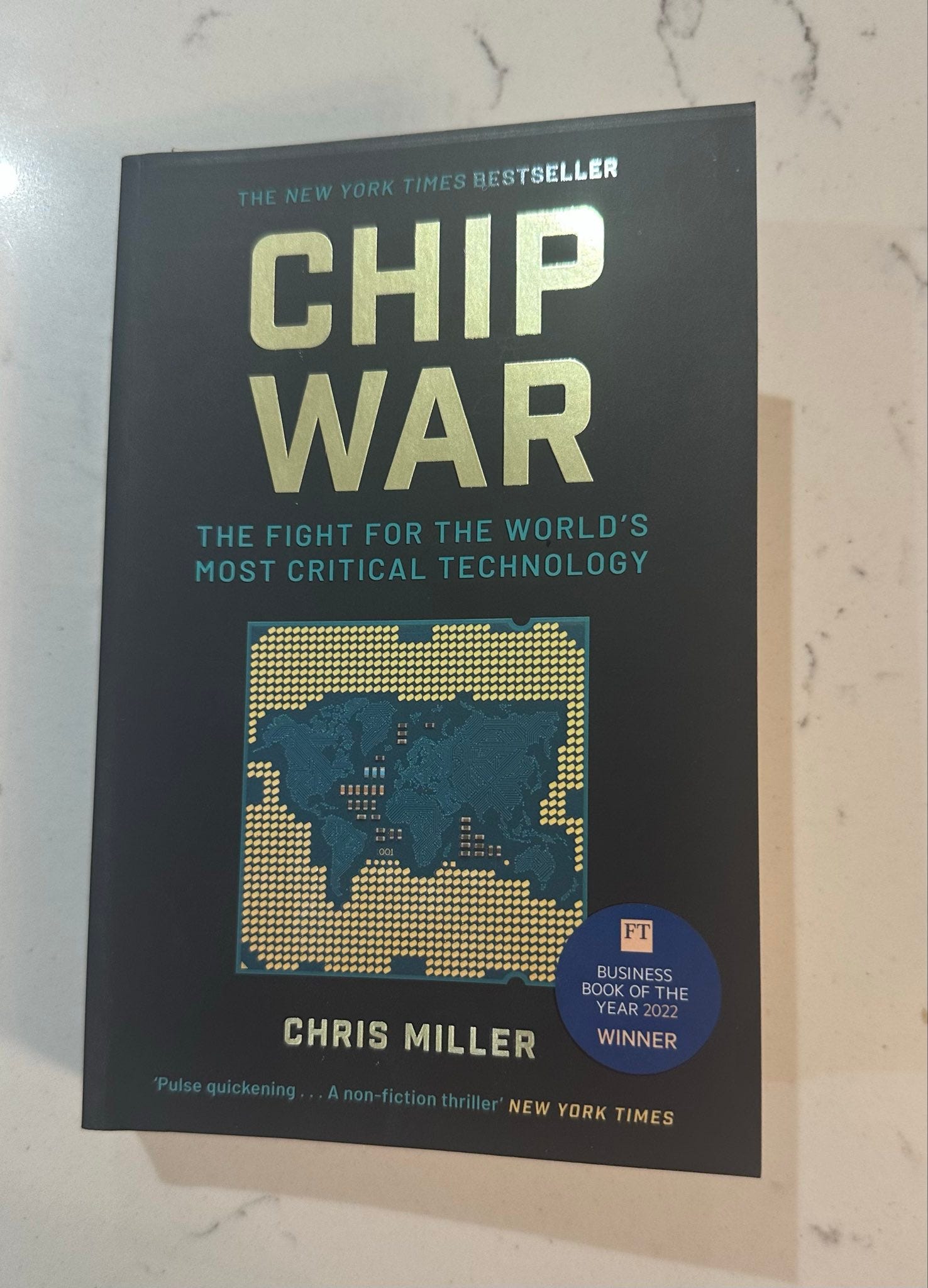
Throughout, the author excellently details the rivalries which ensue both on a corporate and geopolitical scale and how the dominance of certain players ebbed and flowed over time. It truly makes you appreciate the gravitas and importance of this technology, and would be a strong book for semiconductor novices and experts alike.
Apple in China (Patrick McGee)
After reading Chip War, I found myself having an itch for China (a nation that is discussed heavily in the book). Apple in China scratched that itch well. The book documents the relationship between Apple and the Red State.

How Apple leveraged China’s incredible platform for mass production in its earlier years to dominate the technology industry. Also, how, in later years, after China had been so welcoming to Apple, it revealed its claws to ensure that Apple, now essentially trapped in a dependent relationship, would struggle to escape. Apple in China is a great narrative-driven work of non-fiction, which provides a newfound respect for Apple’s secret sauce in supply chain excellence. In addition to the risks they knowingly took to develop it.
1929 (Andrew Sorkin)
This book, which I read in October, recaptured my love of narrative-centric non-fiction. If the author is not careful, they can make tantalizingly exciting moments in history feel drab and dull. I am reading a book at the moment called ‘The Asian Financial Crisis’ by Russell Napier, and it’s a slog because it’s so boringly written. 1929 is the polar opposite. It’s a dense, but light-reading and depiction of life amongst America’s top financiers leading up to and after the 1929 crisis.
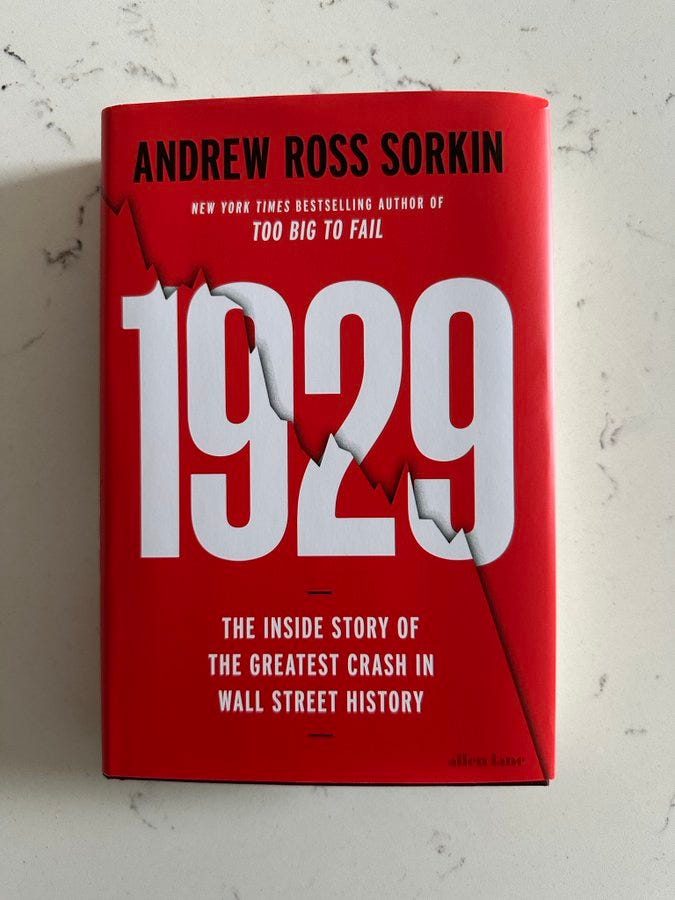
This book made me buy a reading light because I was so eager to turn its pages that I developed a habit of reading before bed. Sorkin’s incredibly detailed research for this book is evident throughout. At the time of reading, it was interesting (and eerie) to notice similarities between the mid-1920s and today.
Buffet & Munger Unscripted (Alex Morris)
I’ve read a few Buffett books in my time, but I had never read ‘The Essays of Warren Buffett’ or similar texts that compile the oracle’s lessons via Berkshire shareholder meeting transcripts. That is effectively what Alex has done here, but the structure, organisation, and format of this compilation are superb.
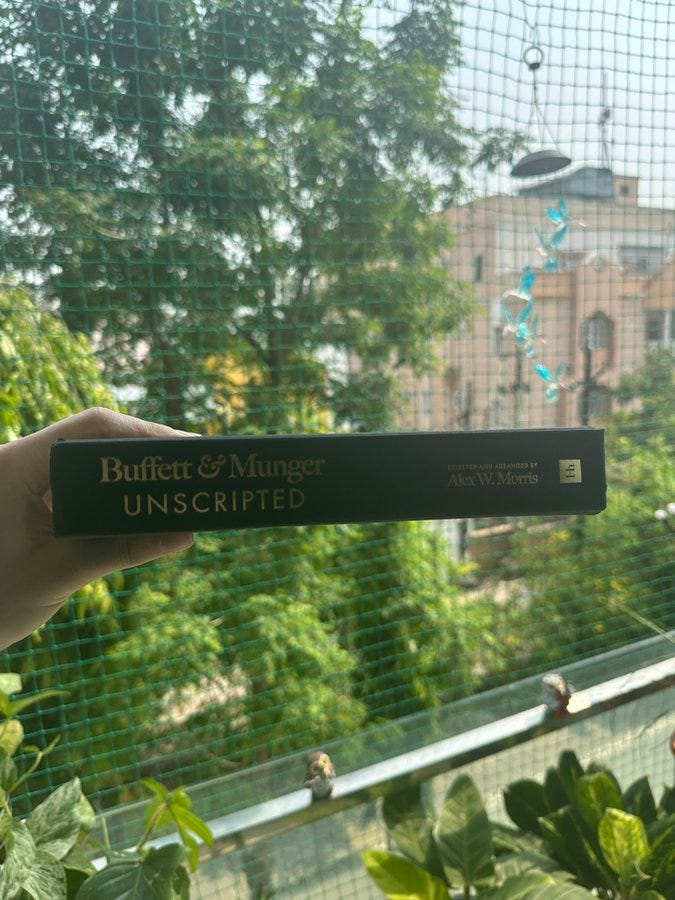
While I can’t speak to others’ variations of this book’s contents, I felt that Alex has written an instant classic with Unscripted. The most up-to-date and expertly crafted curation of Buffett and Munger’s wisdom is found between the hardback confines of this book. I read this book in April, as I embarked on a month-long trip to India and Thailand. I have particularly fond memories of casually progressing through the book on the shores of Ko Samui, ice-cold coconut water in hand.
How the Scots Invented the Modern World (Arthur Herman)
Two figures whom I respect greatly had recommended this book, my father-in-law and the late Charlie Munger. I now understand why. As a Scot myself, one who was previously ignorant of my cultural heritage, I was interested to learn more. The Scots’ impact on the modern world and the incarnation of what is now the United States and Canada is incredible.

The book documents how Scotland, once one of the most poverty-stricken nations in the Western World, became the epicentre of the world’s greatest minds. While that period of Scottish dominance is certainly over, its impact and influence still have a strong standing today.
Enjoyable Reads
4+ Star Reads
These are the books that were enjoyable and that I would recommend to anyone. They just didn’t quite cut it for a 5-star.
High Growth Handbook (Elad Gil)
I kicked off the year with this book, after purchasing it from Stripe Press several years ago (check out their delightful website). It was the first book that Stripe Press published. If you are building software or working in a smaller company that is scaling, this book covers a good amount of breadth. I bought it to understand more about scaling a software company and the relationships between product, design, engineering, sales, and other various departments.
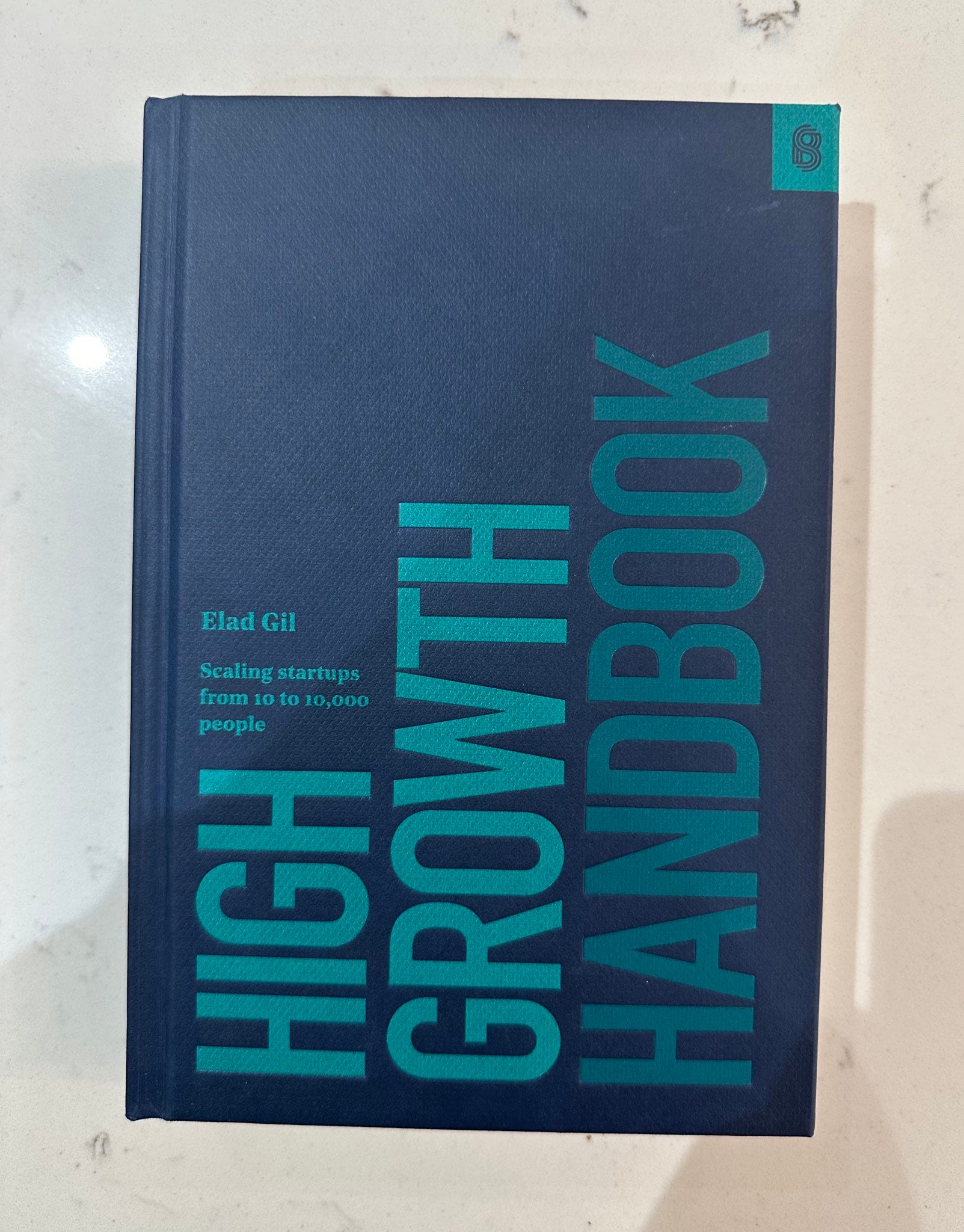

Littered with real-world examples and structured in a way that balances denser ‘textbook’ material with welcome interludes of frequent, thoughtful interviews. It’s one of those thick-looking books that takes less time to consume than expected.
When Genius Failed (Roger Lowenstein)
When Genius Failed is written by Roger Lowenstein, author of my favourite biography of Warren Buffett, The Making of an American Capitalist. He wrote WGF some five years later, in 2000, to tell the tale of Long-Term Capital Management. The fund, run by high-IQ academic-quantitative types, enjoyed a relatively short period of immense success that coincided with such favourable moments in the market as the Russian Debt Default, Asian Financial Crisis, and the Tech Bubble.

The secret ingredient to their destruction? Insane amounts of leverage and bravado. Icarus would be proud of this story. It’s a page turner, albeit a little meandering at times, but if you like details, this book covers the 5-6 year period of LTCM very well.
Expectations Investing (Michael Mauboussin and Alfred Rappaport)
There is an adage that being a great business analyst is not the same as being a great security analyst. Unique disciplines, both of which ought to be studied. I enjoy reading about how Mauboussin shines a light on the thread between fundamentals, price action, and expectations. In theory, it’s an incredibly rational way to invest.
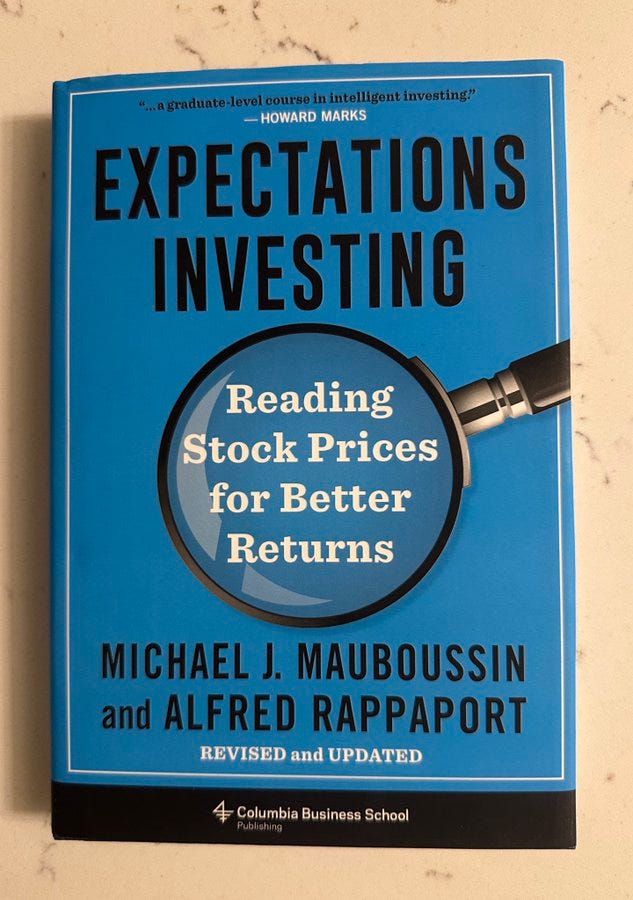

Regardless of one’s chosen investment style, I believe this book belongs in the hands of any investor. It has a lot of replay value. The authors do some admirable work to interview real-life case studies between the academic nature of the content… which at times can be rather drab to read. I chose to read this while on holiday in the South of France. I don’t think it was the right vibe to marry my trip… but it was enjoyable all the same. I wish I had read this book when I was 18 and starting out.
Factfulness (Hans Rosling)
Factfulness was a book gifted to me a few years ago during a trip to India. I finally got around to reading it, and it was enjoyable. In a nutshell, this book stands to remind the reader that the world is actually becoming a better place, despite what you may read in the news. In a world with an endless supply of information, the author highlights the importance of focusing on facts, not narratives. If you actually study the facts, you will most often discover that the world, on the whole, is becoming a better place over time.
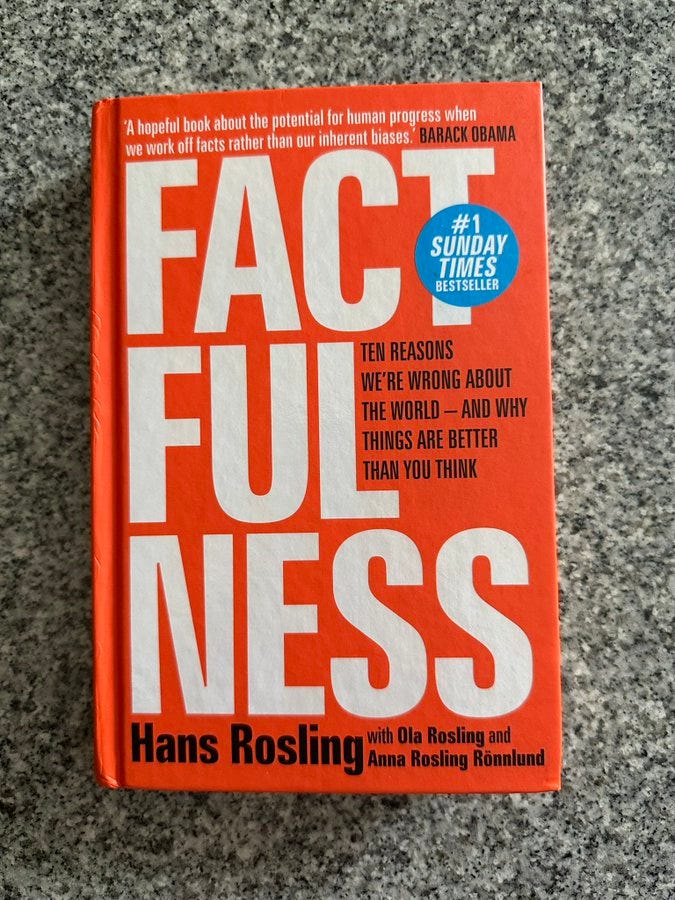
This book could be summarised into a short PDF of a handful of pages. Nonetheless, it’s a very easy and quick read, which I finished in a couple of sittings. It also makes you feel a little bit more optimistic about humanity, which I think a lot of people need these days. I would recommend this to the ignorant or easily convinced people in your life.
The Luxury Strategy (JN Kapferer and V Bastien)
The luxury strategy is a must-read for anyone involved or interested in the luxury space. Whether you are interested in fashion, design, investing, or business strategy, there is something important to be learned here. There is an incredible amount of misunderstanding about the word “luxury”, both from an investment and a consumer perspective.

I fully appreciate the perspective that luxury is a fugazi, incepted to capitalise on psychological drivers of the aspirational and elitists of society. Yet, it works. It has worked since the dawn of commerce. Understanding exactly how it works is the fascinating journey this book takes you on. I will note, and this is partly why it was rated no higher than 4 stars, that the authors academically composed this book. As such, the authors don’t seem to care about readability. It’s occasionally convoluted, repetitive, verbose, and as though the authors swallowed a thesaurus, optimising for vocabulary breadth > readability. Content matter is superb. The writing style could be improved.
The Design of Everyday Things (Don Norman)
I discuss design and work alongside designers every day, and it fascinates me. I wanted to start learning the foundations and expand my knowledge in this area.

This did make me want to explore more design-related books. Not quite a page turner, one chapter did feel like a drag, but overall, a fun and interesting introduction to design. Contained more psychology and business conversation than I expected, which was a plus.
The Rest
<4 Star Reads
These are the books that I persevered with despite finding some difficulty in finishing them. None are books that I would recommend.
Inspired (Marty Cagan)
Thankfully, I only encountered one book that I would go so far as to say I did not enjoy. This book was recommended to me by a colleague, and I would describe it as being “unseasoned chicken and vegetables”. It provides needed nutrients, but does so in a mundane and flavourless way.


I picked this up, looking to understand my role as a product manager some more. However, I found Inspired to be somewhat more suited to a new entrant to the subject. For someone aspiring to work in product or perhaps a student, this may be a useful resource. For someone who has already worked with product for years, I believe there are far superior books than Cagan’s. The content matter is solid, but the delivery is flat and incredibly boring. I found myself reading anything else but this to satiate my appetite.
Thanks for reading,
Conor
Once again, Conor, you gobsmack me. Do you realize, I wonder, how difficult the capsule review is to pull off... leave alone pull off exceedingly well as you do here, in this new post?
You grant (in advance?) only two paragraphs for each review. In that space, you must tell what the book is about, why you like it, why your readers should consider reading it. Two paragraphs! A word was created for someone such as you, exercising your stylistic swagger: pithy.
Well done!
Fortunately for you there are many, many more books similar to your Top 12 of 2025. (I exclude Inspired.) I look forward to reading a year from now your list of Top [--] of 2026.
Great to hear that you enjoyed "Unscripted" - Happy New Year!